Iron Market:
This is one of the busiest markets in Port-au-Prince overflowed with sellers and
The National Museum:
The Mupanah-Museum of National Pantheon houses Haitian relics, early costumes, representative paintings and historic documents in a beautiful building located on the Square of the Heroes of Independence.
Place of the H eros of lndependence:
Statues of Haiti's national heroes are located in front of the National Palace and further up the Champ de Mars. Most impressive is the bronze statue of the unknown slave blowing
As the sun goes down in Haiti; some social and cultural activities take place particularly on weekend. Movie theaters featuring haitian and foreign films, cultural centers, hotels, bar restaurants, nightclubs provide special entertainments to please ambiance lovers and relaxation seekers. There are choreographic spectacles, buffets laden with seafood and Creole delicacies; cabarets, and elaborate outdoor fried foods like accras (fish batter ball), griot (deep fried pork served often with fried plantain), tassot (turkey, beef, or goat in a spicy sauce), and poolside dancing waved by live troubadour rhythms, Haitian Compas, rasin music up to your pick.
the conch shell used to sound the call to the revolution of 1791 which culminated in independence in 1804.
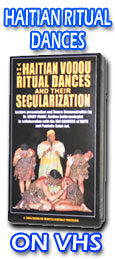
Showing the positive aspects of Haiti, this one-hour video-documentary touches on Haiti's history, people, geography, and resources. It is very well researched and leaves almost no stone unturned.
There are entire portions regarding music, dances, architecture, important sites, and cuisine to learn about...
It is a very refreshing video to add to your library.
Get your copy today, show it to your friend and family, and contribute to promote a positive image of Haiti!
ONLY $11.95 + $2.95 SH
SHOPPING
Handicrafts industry produces a wide variety of aesthetic and practical articles made chiefly from mahogany, sisal and straw. Haitian craftsmen are very skilled in woodcarving, weaving, straw-work and embroidery; their products are available in shops, markets and sidewalks of Haiti. Hand-carved wooden goods are especially interesting. Sculptures of mahogany, plaques with intricate designs, and furniture, particularly chairs with caned backs and seats, are very popular.
SPORTS
There are a variety of sports activities in Haiti. Soccer is the national sport, and games are attended at the Sylvio Cator Stadium in Port-au-Prince and other soccer fields in the countrysides. Tennis courts are available in Port-au-Prince, Pétionville and beach resort hotels. Cockfighting is actively pursued on an informal basis. Snorkeling, swimming, scuba diving, sailing and water skiing are all available at most beach resorts. Boating is available at some beach hotels in the Arcahale beach aera. Fishing sometimes can be arranged but is not yet highly developed in Haiti. Golf course in the country is a delighfful adventure, but not overly challenging for the serious golfer. Basket ball, volley ball, boxing, judo, karate, tae kwon doe are also renowned.