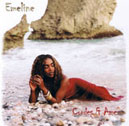
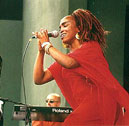
Emeline Michel (Sample: Bel Kongo) Track 1
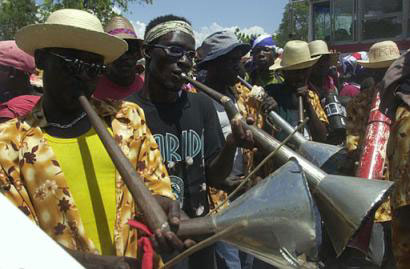
Rara is an important cultural expression in the haitian peasantry; the term applies to a type of music, as well as to an orchestra and to a time of the year.
Rara is very old. The word itself may come from the Yoruba adverb "rara" meaning noisy; it was used only to modify the verb "ke", meaning to make sound or noise. This festival dance was known early in the history of the colony. It may claim even an older origin. It is reported that on "Mi-Carême" day, the Negroes of the plantations dressed in masquerade and celebrated with drums and dances. One of them carried a money basket, decorated with ribbons, suspended from a long thin bamboo pole. At midnight, after a joyful time, they appeared before the master of the plantation.
Someone would recite a speech to him; perhaps they would sing a song in his honor, and the master would place a gift of money in the beribboned money basket held forward for his convenience. Today the money basket, gaudily decorated with ribbons is an inevitable and necessary part of Rara. Usually, Rara takes place a few days before Easter after the city Carnival or Mardi-Gras. Bands of people gather together along the roads of the plains and of the hills to have fun. Each band is headed by three men playing vaccines, or bamboos, their way lighted by torches or fueled lamps; the crowds surge forward, stopping to receive money, perhaps food, at each place. Rara ends the morning of Easter Sunday.
A
one-hour video-documentary
© 2004
• Haitian Treasures • All rights reserved.